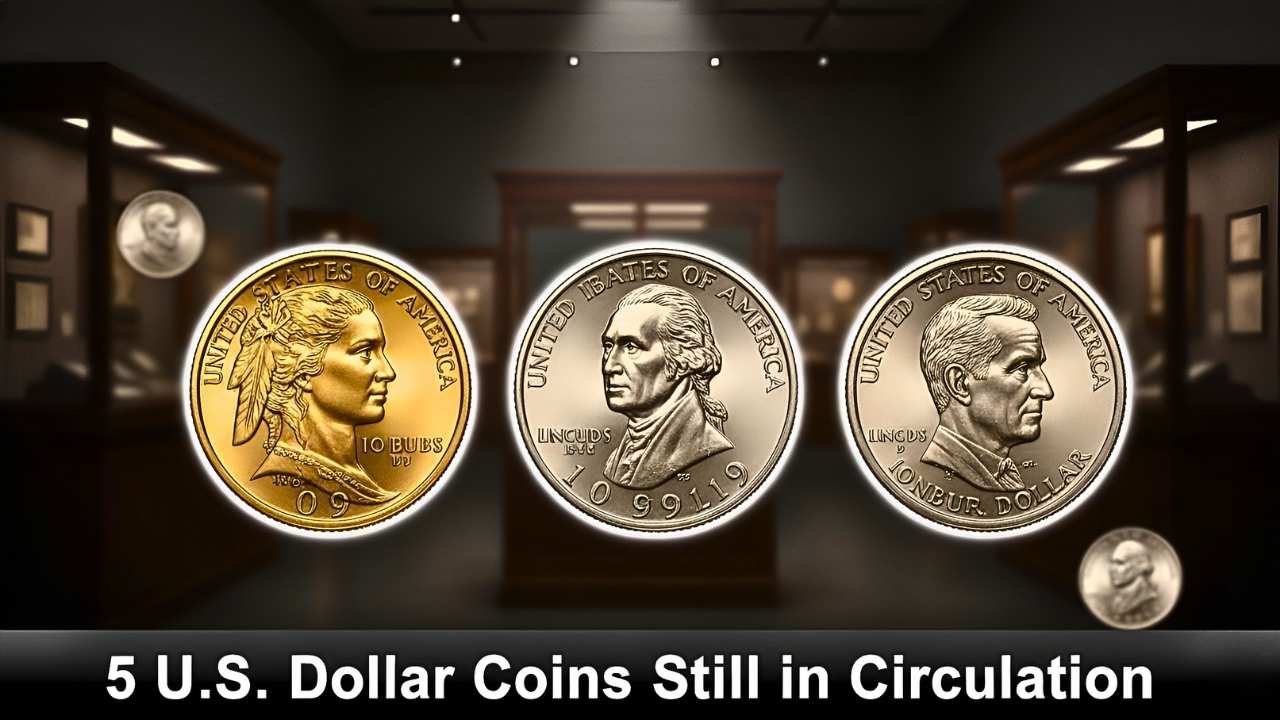
5 U.S. Dollar Coins Still in Circulation: When we think about rare and valuable coins, many of us imagine old relics, tucked away in vaults or museums, far removed from the coins in our daily pocket change. However, there are still several U.S. dollar coins currently in circulation that could be worth far more than their face value. Whether due to errors, limited mintages, or special editions, these dollar coins are hidden gems for collectors and savvy investors alike. In this article, we’ll explore five U.S. dollar coins still in circulation that could make you rich, and how you can spot them in your change before they slip away.
1. 2000 Sacagawea Dollar (Wide Rim)
The Sacagawea Dollar, introduced in 2000, was a groundbreaking coin for its time, featuring the image of the Shoshone woman who helped guide Lewis and Clark on their expedition. While most Sacagawea Dollars are relatively common and worth just their face value, a particular variety of the 2000 Sacagawea Dollar—called the “Wide Rim”—is worth far more.

The Wide Rim variety was the result of a minting error in which the coin’s design was struck with a wider-than-usual rim, making it distinguishable from other coins in the series. This error occurred during the early production runs, and as a result, these coins are very rare. In mint condition, a 2000 Sacagawea Dollar with the Wide Rim error can be worth anywhere from $500 to $1,000, with some coins selling for even more depending on the grade.
To identify a Wide Rim Sacagawea Dollar, closely examine the distance between the edge of the coin and the design. If the rim appears noticeably wider on the obverse (front) of the coin, you might have a valuable variety on your hands.

2. 2009 Native American Dollar (Missing Edge Lettering)
The 2009 Native American Dollar is part of the U.S. Mint’s annual program of releasing coins that feature designs highlighting important aspects of Native American culture and history. The coin released in 2009 depicted the contributions of Native Americans to the building of the U.S. economy, specifically focusing on the role they played in agriculture.
What makes the 2009 Native American Dollar valuable is a rare error that occurred during production: some of the coins were struck without the edge lettering, which usually reads “E Pluribus Unum” and the year of minting. The omission of the edge lettering was a significant mistake and created a limited number of these “no-edge-lettering” coins.

Coins with this error are highly prized by collectors, and in uncirculated condition, they can fetch anywhere from $500 to $2,000. Some of the higher-grade examples have been known to sell for even more at auctions. If you come across a 2009 Native American Dollar, look at the edge of the coin for any missing inscriptions. If the lettering is absent, you could be holding a rare and valuable coin.
3. 1979-1981 Susan B. Anthony Dollar (Wide Rim)
The Susan B. Anthony Dollar, first introduced in 1979, was an attempt by the U.S. Mint to create a more easily recognizable dollar coin. While the Susan B. Anthony Dollar never became widely accepted and was eventually discontinued, certain years of the series have become quite valuable, especially those with minting errors.
Between 1979 and 1981, a “Wide Rim” variety of the Susan B. Anthony Dollar was produced. This error occurred when the coin’s design was struck with an unusually wide rim, similar to the Sacagawea Wide Rim error. The 1979 Susan B. Anthony Dollar, in particular, is highly coveted by collectors.
If you find a 1979 or 1980 Susan B. Anthony Dollar with a wide rim, it could be worth between $500 and $1,500 depending on its condition. The key to spotting the wide rim is looking at the edge of the coin. If the rim appears to be much broader than typical Susan B. Anthony Dollars, you might have a highly valuable coin in your hands.

4. 2007 Presidential Dollar (John Adams, Missing Edge Lettering)
The Presidential Dollar series, introduced in 2007, honors the U.S. Presidents by featuring their portraits on the obverse of the coin. The 2007 John Adams Presidential Dollar is one of the most well-known coins in the series, but an error that occurred during the production of the coin makes it particularly valuable.
Some of the 2007 John Adams Presidential Dollars were struck without the edge lettering, which typically includes the phrase “E Pluribus Unum,” the year, and the mintmark. These “no-edge-lettering” coins are rare and can fetch significant sums in the market. In pristine, uncirculated condition, a 2007 John Adams Presidential Dollar with the missing edge lettering can be worth anywhere from $500 to $1,000 or more.
To check for this error, simply examine the edge of the coin for the usual inscriptions. If the lettering is missing, you may have an error coin that’s highly sought after by collectors.
5. 2000-P Sacagawea Dollar (Cheerios Coin)
The 2000 Sacagawea Dollar is one of the most well-known dollar coins still in circulation, but one specific variety of this coin is worth far more than its face value: the “Cheerios Coin.” This coin earned its name after the U.S. Mint released a special batch of Sacagawea Dollars in 2000 to be included in Cheerios cereal boxes as part of a promotional campaign. These coins were struck with an unusual, slightly higher quality, and were intended to be a limited edition.

Although many of these coins were dispersed to the public, only a small number of them remain in circulation today, and they’re highly coveted by collectors. The 2000-P Sacagawea “Cheerios Coin” is worth significantly more than regular Sacagawea Dollars. Depending on the coin’s condition, these rare specimens can be worth anywhere from $500 to over $1,500.
The key to identifying a Cheerios Coin is to look for the distinct, sharp detailing and high-quality strike. The Cheerios Coin typically has a very crisp and well-defined design, compared to other Sacagawea Dollars that may show more wear.
How to Spot Valuable Dollar Coins
While finding one of these rare dollar coins may seem like a stroke of luck, there are a few tips you can follow to increase your chances of spotting a valuable coin:
- Examine the Edges: Many of the rare dollar coins with errors involve missing or misaligned edge lettering. By checking the edges of your dollar coins, you can identify coins that might be worth significantly more than face value.
- Look for Unique Features: Pay attention to the size of the rim, the sharpness of the design, and any oddities in the coin’s appearance. Coins that feature wide rims, doubled lettering, or other unusual features are often more valuable.
- Check the Year and Mintmark: Specific years and mintmarks are key to identifying rare coins. The 2000 Sacagawea Dollar and the 2007 Presidential Dollar are examples of years with notable errors. Knowing which years were prone to minting mistakes can help you target your search.
- Get Coins Graded: If you think you’ve found a rare coin, it’s worth getting it professionally graded. A reputable grading service like PCGS or NGC can determine the coin’s condition and authenticity, which will help you assess its value more accurately.
Conclusion
While many people see U.S. dollar coins as just another part of everyday transactions, the truth is that some of these coins are worth far more than their face value. Whether due to minting errors, limited releases, or unique features, there are several dollar coins still in circulation that could make you rich. From the rare 2000 Sacagawea “Wide Rim” to the 2009 Native American Dollar with missing edge lettering, these coins are treasures waiting to be discovered. So, next time you come across a dollar coin in your change, take a closer look—you might just find a hidden gem worth hundreds, if not thousands, of dollars.