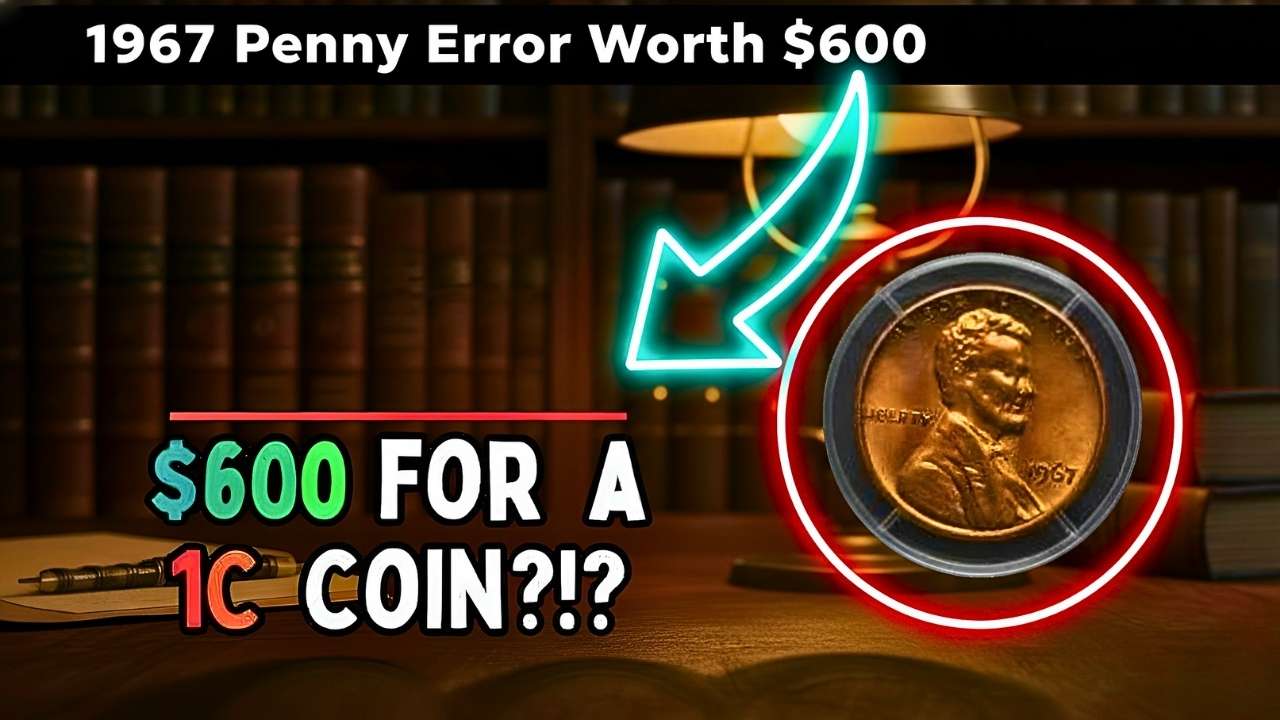
1967 Penny Error Worth $600: Most coin collectors know the thrill of discovering a rare piece hidden in everyday change. The Lincoln cent series is full of surprises, and among them the 1967 penny stands out. While millions of these pennies were minted and most are completely ordinary, a small number carry a striking variety known as the doubled die. This rare error has gained attention because well preserved examples have sold for around six hundred dollars. Learning how to recognize this variety can turn an unnoticed penny into a valuable find.
A Brief Look at the 1967 Minting Year
The year 1967 was unusual for United States coinage. For several years the US Mint had removed mint marks from coins in an attempt to discourage collectors from hoarding coins during a period of nationwide coin shortages. As a result every 1967 penny carries no mint mark, regardless of where it was struck. Nearly three billion Lincoln cents were produced that year, so the vast majority are extremely common. The combination of a high mintage and the absence of mint marks makes it easy to assume that no 1967 penny could be special. Yet error varieties can appear in any year and the doubled die cent from 1967 is one that collectors continue to watch for.

What a Doubled Die Really Is
To understand why this penny is special it helps to know what a doubled die is. A doubled die is created during the production of the working dies that strike the coins. When a die receives more than one impression from the hub and those impressions are not perfectly aligned, raised doubling will appear on the final coin in the areas where the images overlap. This is very different from mechanical doubling which happens during the strike of the coin and creates flat and shelf like doubling. True doubled dies show strong, raised details that reflect an actual error in the die itself. Because the die strikes thousands of coins, the doubling appears on every coin that die produces. This is why doubled die coins can be extremely collectible. They represent a genuine minting variety and are much rarer than typical worn or damaged coins.
Where to Look for the Doubling on the 1967 Penny
The main areas to examine on a suspected 1967 doubled die cent are the inscriptions on the obverse. Most known examples show clear extra thickness or separation in the letters of LIBERTY and sometimes on the motto IN GOD WE TRUST. The date can also show signs of doubling although this is usually less dramatic than the lettering. When examining the coin, tilt it under a strong light and watch for raised, split lines on the edges of the letters. The key is raised doubling that looks like a second image, not flat or smeared metal.
Collectors often rely on a simple magnifier. A basic ten power loupe is usually enough to spot legitimate die doubling. With patience and careful viewing even beginners can differentiate between genuine doubled dies and common forms of mechanical doubling. The more familiar you become with regular lettering on Lincoln cents, the easier it will be to identify something unusual.
Why Condition Matters So Much
Even a rare coin loses value when heavily worn. The 1967 doubled die cent is no exception. Circulated pieces may sell for modest amounts, but coins in mint state condition are the ones that can reach values around six hundred dollars or more. Sharp details, minimal contact marks and bright surfaces always attract collector interest. If you believe you have found a doubled die, avoid touching the coin directly. Oils from your fingers can dull the surface and reduce its value. Store it in a small protective holder or envelope until you can have it examined by an expert if needed.

Uncirculated rolls from 1967 are still found today and sometimes these rolls produce error varieties. Searching through unsearched rolls or old inherited collections can be one of the most exciting ways to uncover hidden treasures.
Distinguishing True Errors From Imitations
Many coins display what looks like doubling but is not. Mechanical doubling, damaged dies or simple wear can all mimic the appearance of a doubled die. Mechanical doubling tends to look flat and shelf like. It often appears on the trailing edges of letters and numbers and lacks the sharp profile of true raised doubling. Die deterioration can make the lettering appear swollen or distorted but this is not true doubling either.
Because confusion is common, some collectors compare their finds with reference images in guides, forums or printed catalogs. If you are uncertain about your coin, professional grading services can confirm whether the doubling is genuine. While this is not necessary for every coin, it can be helpful if you believe your example might be one of the higher value varieties.
How Rare Is the 1967 Doubled Die
The exact number of 1967 doubled die cents is not known. What is clear is that the variety is scarce. With a mintage of billions and only a small number showing confirmed doubling, the odds of finding one are slim but not impossible. This is one reason collectors enjoy the hunt. The variety is not famous in the same way the 1955 or 1969 S doubled die cents are, but it has built a strong reputation among specialists. The price of about six hundred dollars for well preserved examples reflects this combination of scarcity and collector demand.
Tips for Searching Pennies Effectively
Coin roll hunting remains one of the best methods for finding rare varieties. If you want the best chances of finding a 1967 doubled die, consider acquiring rolls from banks, estate sales or coin shops that may have older stock. Patience is key. You may search through thousands of pennies before finding something notable. Set up good lighting, use a simple magnifier and handle the coins gently. Focus first on LIBERTY and the motto, since these areas are most likely to show doubling. As you gain experience you will be able to scan coins more quickly and confidently.
The Enjoyment Behind the Hunt
Part of the appeal of collecting Lincoln cents is the possibility of discovering something valuable in plain sight. Even though most 1967 pennies are worth only their face value, the existence of a genuine doubled die variety keeps the year interesting. Each penny you examine carries a little mystery. Finding a rare example creates a story you can share with other collectors and adds a personal connection to your collection.

Final Thoughts on the 1967 Doubled Die Lincoln Cent
The 1967 doubled die Lincoln cent is one of those hidden treasures that excite new and experienced collectors alike. Its value comes from both its rarity and the beauty of the doubled design. With careful examination and a bit of patience, anyone can learn to identify this variety. You may never know when an ordinary looking penny in your pocket might turn out to be something special. The possibility alone is enough to keep collectors looking closely at every coin that passes through their hands.